Research point – textiles in my everyday life
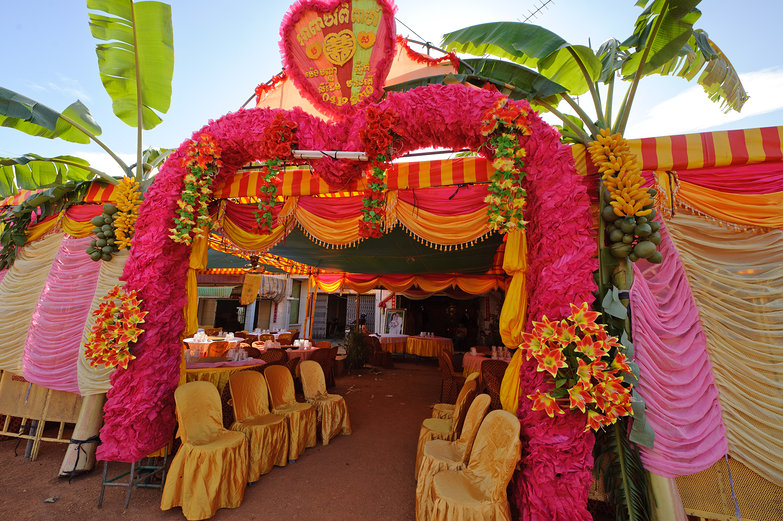
As I live in Cambodia, I looked largely into everyday textile uses within the Khmer culture I am surrounded by. Most significant use of fabrics is found among colorful Khmer wedding tents: Large scale, temporary wedding halls that are constructed right on the doorstep of the bride or groom’s family home. The purpose here is to create a design which transforms a simple wedding pavilion into a luxurious ballroom, you”ll find nearly everything in the tent either, covered, wrapped or draped in fabrics, ranging from cheap Chiphone to expensive silks. The purpose of the fabrics is mainly decorative, to set the atmosphere, color scheme and design of the event place. The use of fabric is immersive, in either calm or bright colors, traditional Khmer fabrics and patterns may be used.

Gers, tents and nomadic textile architectures
Types of Textile Dwellings Designed for Nomadic Lifestyles:
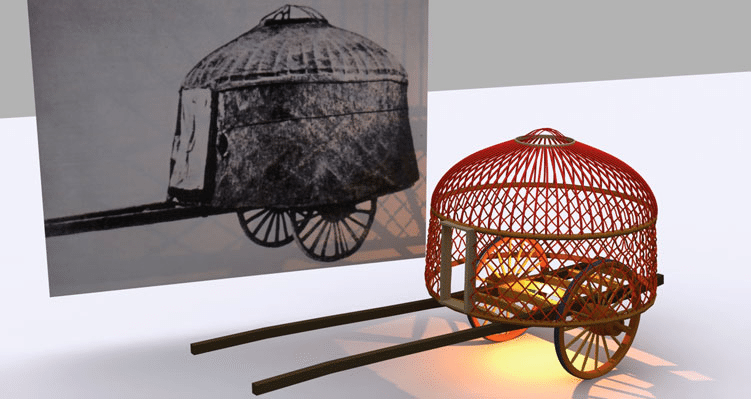
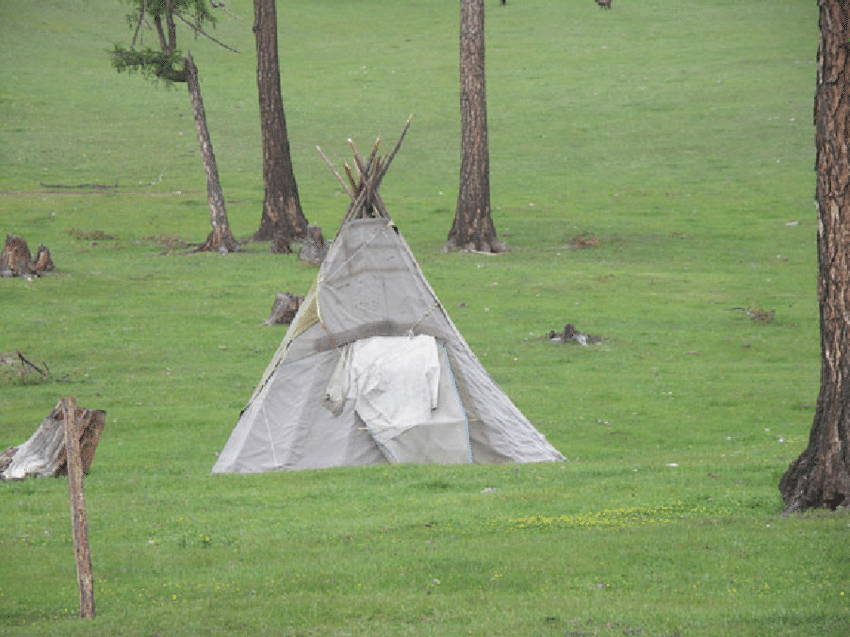
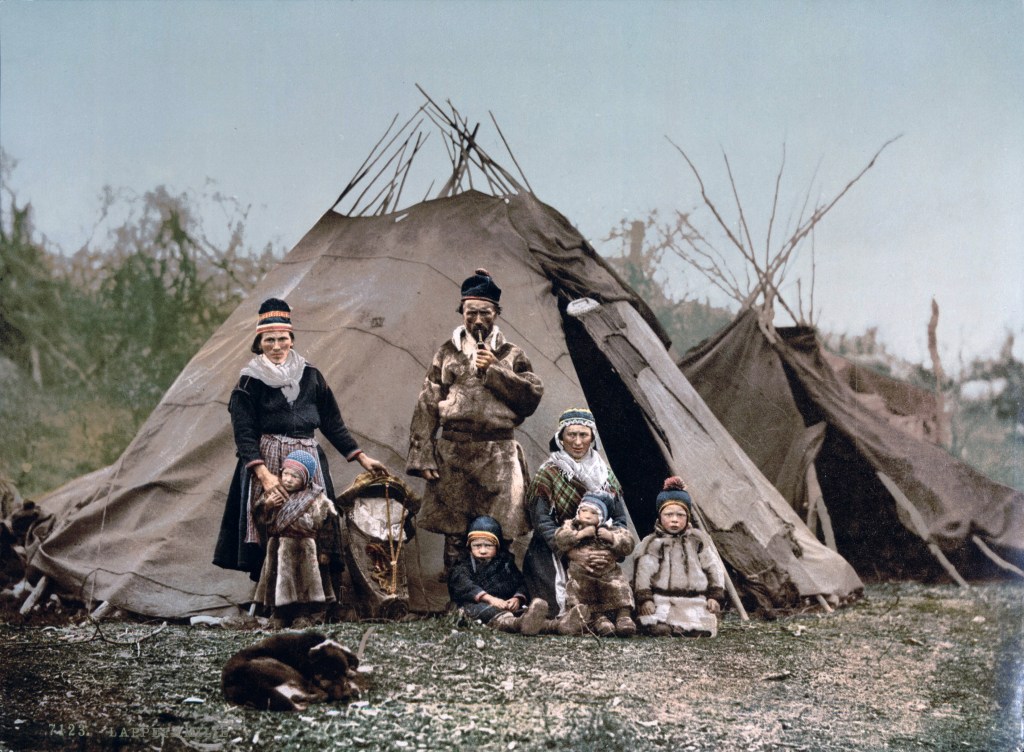
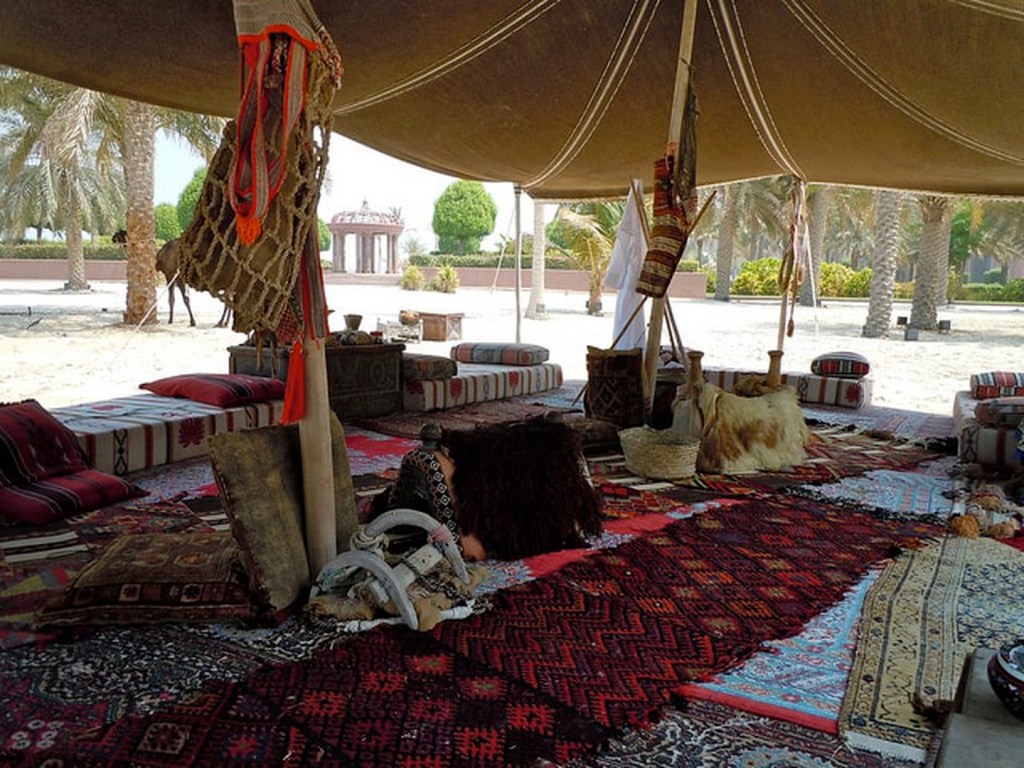
Historically, several types of portable dwellings were designed by nomadic indigenous people throughout Inner Asia, the Middle east, Parts of Africa Native America. These include:
- Tents with a load-bearing inner structure
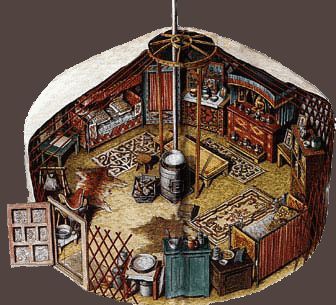
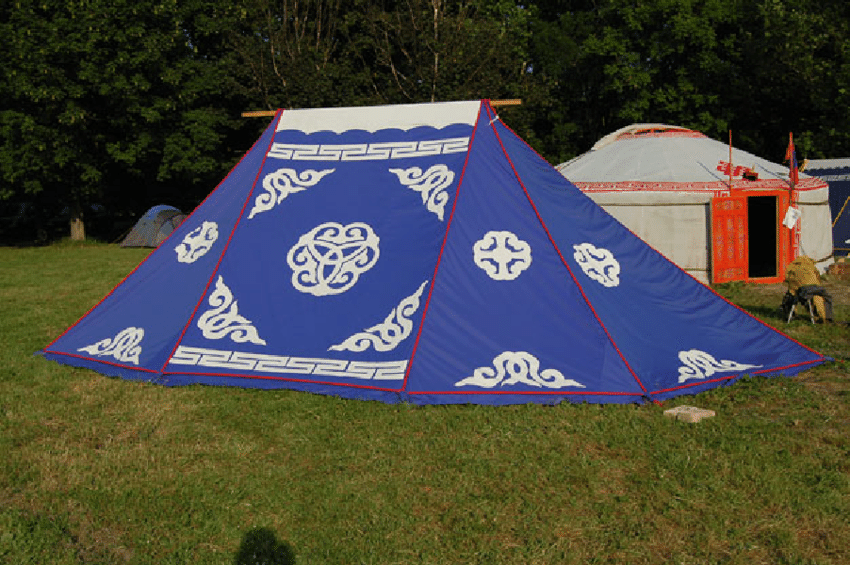
- The yurt (Turkic) or ger (Mongolian), a trellis tent with a load-bearing inner structure and felt covering
- Carts with tents attached to them
- The black tent and different tent form made out of black goat hair or yak hair
- Different tents, usually for very temporary purposes and not intended for permanent dwelling.
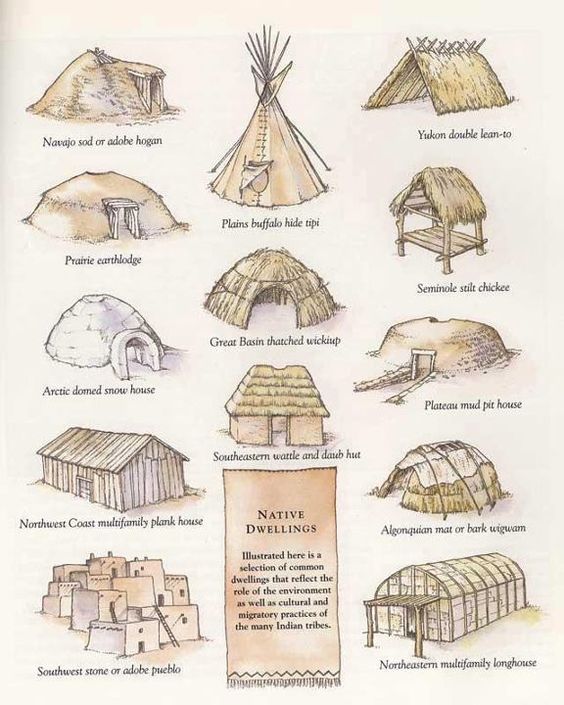
Observing traditional nomadic designs from around the world, we might notice certain cultural similarities The Bedouin, Mongolian, native American and multiple other nomadic ethnic groups such as communities based on hunting and animal husbandry, seasonal migration due to necessity of feeding cattle, annual hunts, nomadic trade and annual festivals. Another is living in a vast, and often tough environment, where permanent cultivation is difficult. Wherever the dwelling is situated, becomes the centre of the plain or dessert. Nomadic cultures have developed an advance traditions of hospitality as a mean of increasing chance of survive in such vast, hostile environments.

These dwellings, represent design out of necessity, which incorporates materials from of the native environment, wood, weaved animal wool and skins, usually camel and Yaks. Other designs combine the use of sheets made of interweaved canes, straw or bark leaves, and sometimes the surrounding earth itself in form of mud and clay. “While in Mongolia the harsh climate makes agriculture a not very viable alternative to animal husbandry, in many Central Asian countries there is an option, especially with the advent of modernization, to switch to agriculture. Especially in those countries formerly part of the USSR.” Many governments either encourage or pressure ethnic nomads to abandon traditions and switch to agriculture and permanent settlements.
Top left: illustrations of native American dwellings, Pinterest, available on: https://i.pinimg.com/originals/ec/0a/05/ec0a052e60cc3005031f13166011740a.jpg accessed 27/12/2020
Top right and below: Illustrations of Mongolian / Tibetan and central Asian yurt designs, Becky Kemery 2010, available at: YurtInfo.org Below: Yurt interior structure, Zamolyi, Ferenc. (2016). Architecture: Nomadic Architecture of Inner Asia. 10.1007/978-94-007-7747-7_10207. available on:https://www.researchgate.net/publication/314933402_Architecture_Nomadic_Architecture_of_Inner_Asia/citation/download accessed 27/12/2020


Serpentine Sackler Gallery by Zaha Hadid
RICCARDO BIANCHINI 08/04/2021, Serpentine Sackler Gallery, The Inexhibit, text and images available on: https://www.inexhibit.com/mymuseum/serpentine-sackler-gallery-london/ accessed 27/12/2020
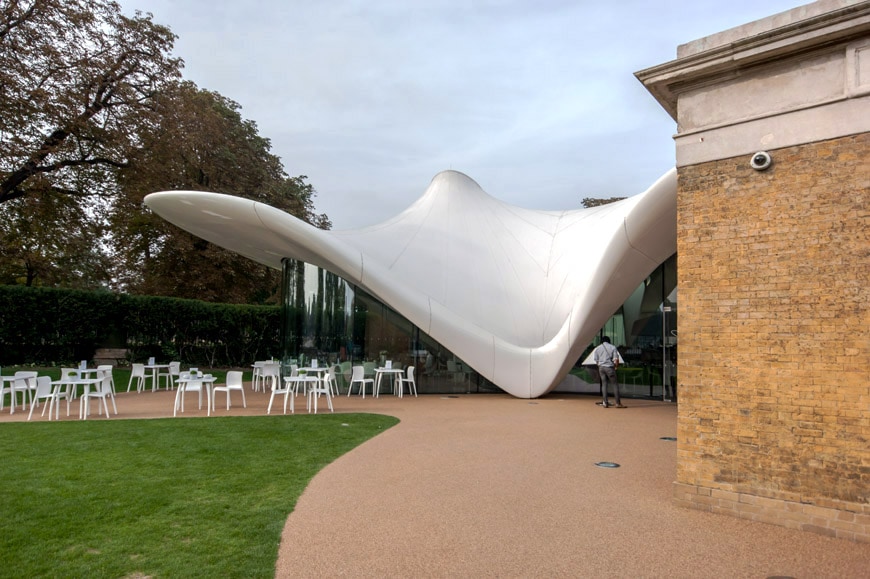
‘The Sackler Gallery was opened by the Serpentine Galleries in Kensington Gardens, it was inaugurated in 2013 as an addition to the original Serpentine Gallery, located on the other side of the Serpentine Lake. The project was built thanks to a donation by the Dr Mortimer and Theresa Sackler Foundation, hence the gallery name. The Sackler Serpentine Gallery is a former 1805 gunpowder store, to which an extraordinarily iconic extension has been added. Both the renovation of the historic building and the addition were designed by Zaha Hadid architects.’
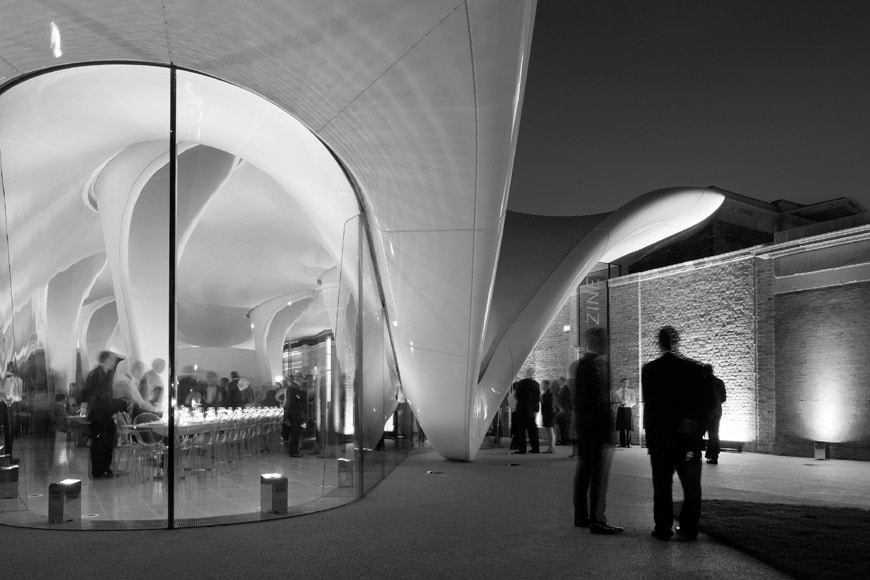
‘The addition, housing the restaurant and a social space, is conceived with an appearance intentionally different, to create a fascinating and dynamic ensemble of an early 19th century architecture and a contemporary 21st century one.
The extension is made of a curvilinear skeleton constituted of round steel hollow profiles across which a glass fibre woven textile membrane is stretched; five internal columns create the roof high-points and also convey the skylight inside. The perimeter enclosure is composed of a curved glass screen, so creating an ethereal space filled with natural light coming from all directions. The light, almost temporary appearance of the new addition, was intentionally adopted so to complement the historical building without prevailing on it.’
Architectural Applications of Fiberglass
Lucia, 2017, Architectural Applications of Fiberglass, Modlar, The Modern Architect’s Digesttext and images available on: https://www.inexhibit.com/mymuseum/serpentine-sackler-gallery-london/ accessed 27/12/2020
Fiberglass refers to a group of products made from individual glass fibers combined into a variety of forms. Glass fibers can be divided into two major groups according to their geometry: continuous fibers used in yarns and textiles, and the discontinuous (short) fibers used as batts, blankets, or boards for insulation and filtration.
Though commercial use of glass fiber is relatively recent, artisans created glass strands for decorating goblets and vases during the Renaissance. A French physicist, Rene-Antoine Ferchault de Reaumur, produced textiles decorated with fine glass strands in 1713, and British inventors duplicated the feat in 1822. A British silk weaver made a glass fabric in 1842, and another inventor, Edward Libbey, exhibited a dress woven of glass at the 1893 Columbian Exposition in Chicago.
Fiberglass can be formed into yarn much like wool or cotton, and woven into fabric which is sometimes used for draperies. Fiberglass textiles are commonly used as a reinforcement material for molded and laminated plastics. Fiberglass wool, a thick, fluffy material made from discontinuous fibers, is used for thermal insulation and sound absorption. It is commonly found in ship and submarine bulkheads and hulls; automobile engine compartments and body panel liners; in furnaces and air conditioning units; acoustical wall and ceiling panels; and architectural partitions.
Architectural Applications of Fiberglass:
fiberglass has many architectural uses, whether it’s used on the structure or as a complimentary embellishment, this material can be surprising. The material has a wide list of positive properties: it withstands inclement weather, it behaves well in sub-zero temperatures, it doesn’t suffer from corrosion, it’s easy to maintain, it has low thermal conductivity, it’s sturdy, behaves well in tension and compression, it’s light, allows a smooth finish and it’s cheap compared to concrete or other traditional materials.
Fiberglass offers a number possibilities when applied to facades:
Fiberglass can be used as a structural shell – Since it’s a lightweight material that can be easily assembled and pre-fabricated it can be a good alternative to cast concrete or wood structures when designing a complex shape, such as a non-orthogonal organic shape, and keep it light. While a fiberglass shell structure is not standalone, because it needs a substructure to contain it, it still saves time and money.
Tenso-Structures
When paired with fabric, fiberglass can be an ally at the moment of erecting tenso-structures such as shades in public spaces or exterior façade skins. It provides the structure with rigidity while keeping it light; it also improves the material’s impermeability and doesn’t decay or disintegrate like gypsum, which could be used with a similar result.
Modern external use fabrics:
PVS coated polyester, PTFE coated glass cloth, Silicon coated glass cloth
Famous examples of modern tensile structures:
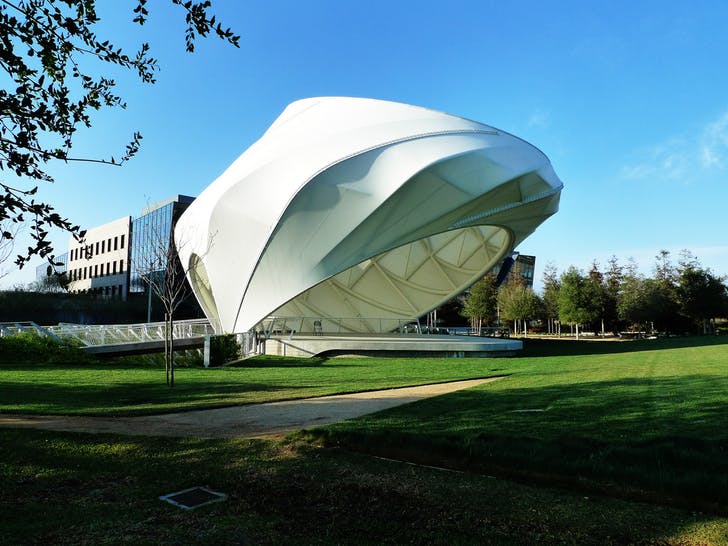
Playa Vista Central Park
Michael Maltzan Architects, 2010
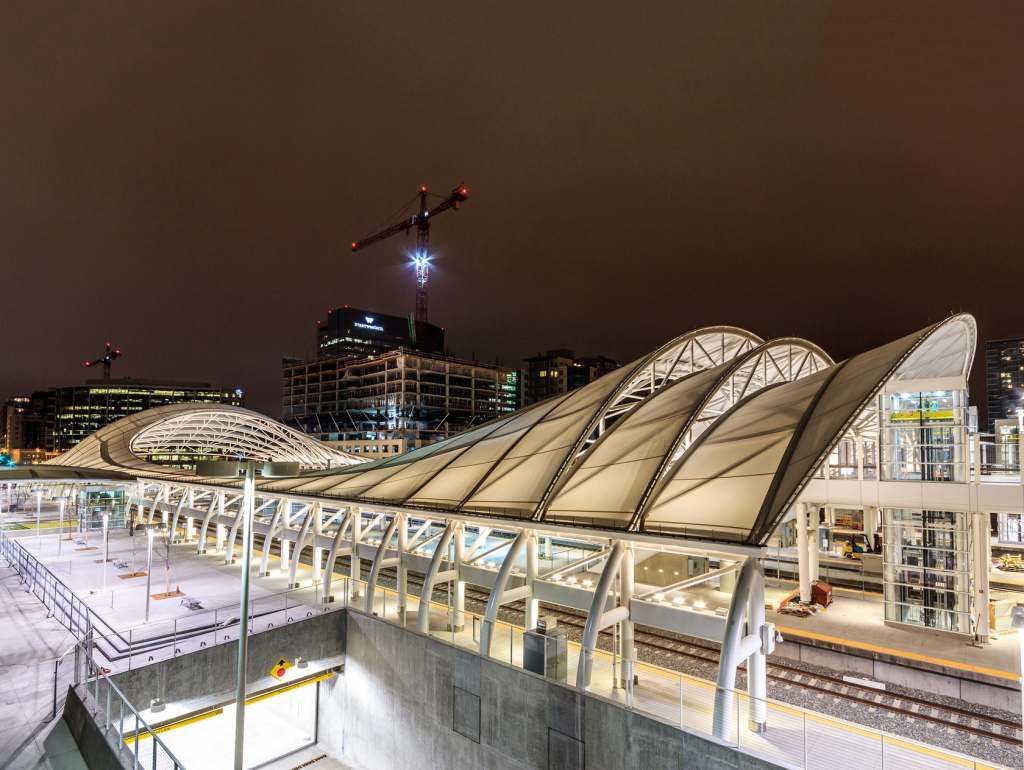
Denver Union Station
Skidmore, Owings & Merrill LLP (SOM)
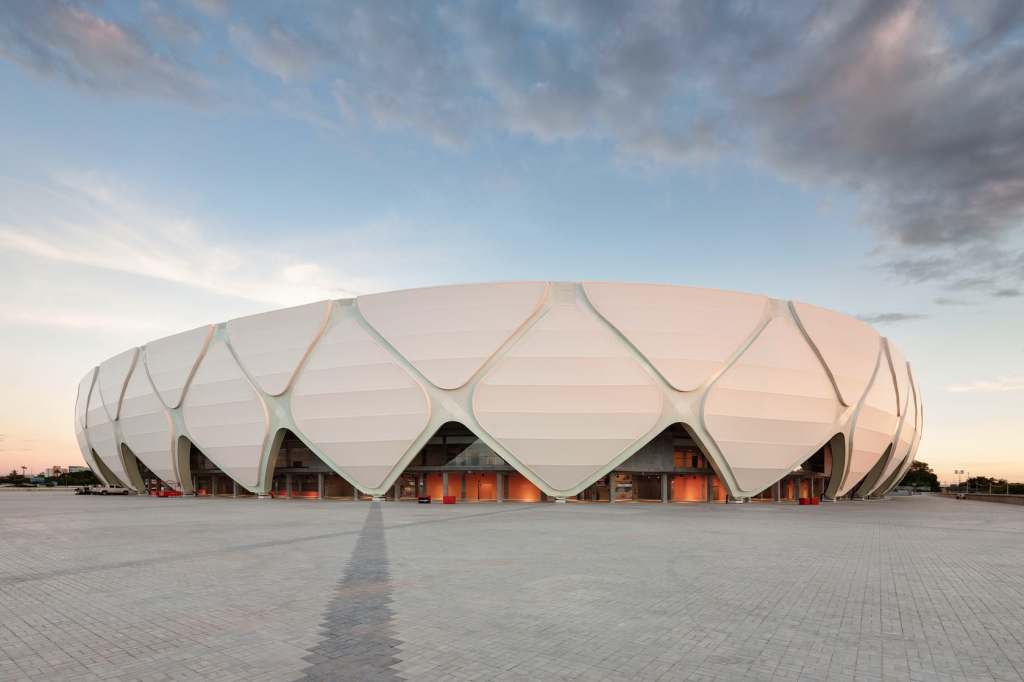
Arena da Amazônia
Schlaich Bergermann Partner
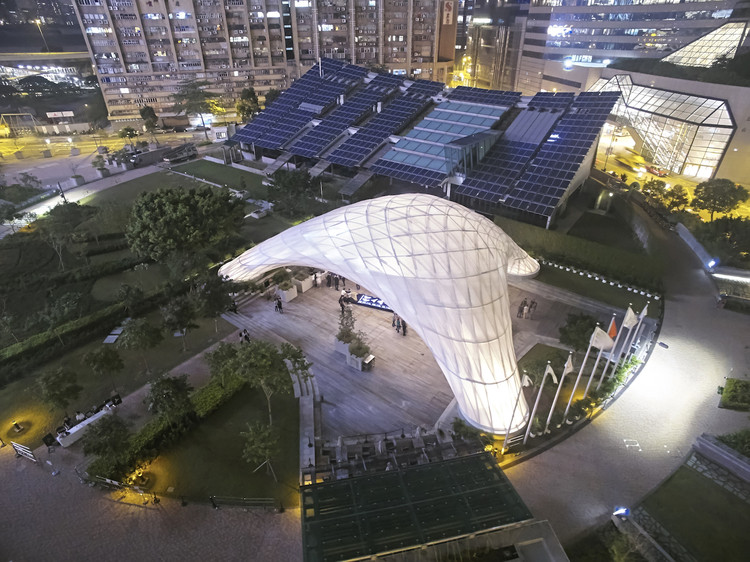
ZCB bamboo pavilion
Chinese University school of architecture, Hong Kong
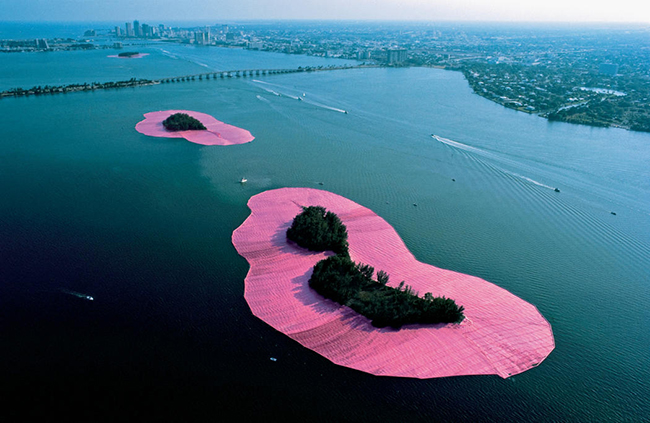
Christo and Jeanne-Claude: Surrounded Islands 1980–83
ART or DESIGN
TEMPORARY or PERMANENT
LARGE SCALE or SMALL SCALE
TRANSFORMING and/or DEFINING and/or FORMING
IMMERSIVE and/or DISTANT
PATTERN and/or COLOUR and/or REPETITION and/or SHAPE
Drawing 1982 in two parts
15 x 96″ and 42 x 96″ (38 x 244 cm and 106.6 x 244 cm)
Pencil, charcoal, pastel, wax crayon, enamel paint, aerial photograph and fabric sample
Photo: Wolfgang Volz, © 1982 Christo, Image available on: http://www.morethangreen.es/en/surrounded-islands-by-christo-and-jeanne-claude/ accessed 29/12/2020
- On May 7, 1983, the installation of Surrounded Islands was completed in Biscayne Bay, between the city of Miami, North Miami, the Village of Miami Shores and Miami Beach.
- Eleven of the islands situated in the area of Bakers Haulover, Eleven of the islands situated in the area of Bakers Haulover, extending out 200 feet (61 meters) from each island into the bay. The fabric was sewn into 79 patterns to follow the contours of the 11 islands.
- For two weeks, Surrounded Islands, was seen, approached and enjoyed by the public, from the causeways, the land, the water and the air.
- Preparation of the Surrounded Islands took place since April 1981, The marine and land crews picked up debris from the eleven islands, they had removed some forty tons of varied garbage
- As with Christo and Jeanne-Claude’s previous art projects, Surrounded Islands was entirely financed by the artists, through the sale of preparatory drawings, collages, and early works. The artists do not accept sponsorship of any kind.
My impression:
The art project scale, crowd funding methods and human resource recruitment are truly impressive and prove anything is possible in art.
Surrounded Island uses colorful fabric is order to accent and highlight the form of the land. It created an interesting visual experience, mainly due to the bright pink, contrasted with the blue sea and vegetation’s green. “The achieved effect was an ephemeral composition in blue, green, pink, and turquoise;”
Despite being a short term project in consultation with ecological experts. I estimate that due to the scale of area covered by the installation, there must’ve been certain negative impact on sea life, like crustaceans and turtles, who would have difficulties reaching the shore during the project duration.
The shape of covered islands, along with the choice of color, raise connotation of female form and sexuality.
Christo and Jeanne-Claude managed to establish an authentic practice based on the mixture of sculpture, installation art, and architecture. A starting point for such an aesthetic can be traced back to Duchamp’s readymade, a concept which influenced several artists belonging to the movement of Nouveau Realisme including the artist duo. Their pieces have not only intrigued and inspired the movements such as Land Art, but they have also moved architectural circles in terms of articulation of the domains of spatiality and the use of public space.’
spatiality – any property relating to or occupying space. spatial property. property – a basic or essential attribute shared by all members of a class; “a study of the physical properties of atomic particles”
Text and qoute ref: Windwall, The Story of Surrounded Islands, September 29, 2018, Balasz Takac, link ref
Christo and Jeanne-Claude: Wrapped Trees:
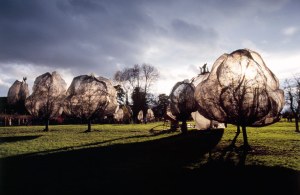
Wrapped Trees, Fondation Beyeler and Berower Park, Riehen, Switzerland, 1997-98
Photo: Wolfgang Volz
© 1998 Christo available on: https://coveringchristo.wordpress.com/rationale/ accessed 29/12/2020
ART or DESIGN
TEMPORARY or PERMANENT
LARGE SCALE or SMALL SCALE
TRANSFORMING and/or DEFINING and/or FORMING
IMMERSIVE and/or DISTANT
PATTERN and/or COLOUR and/or REPETITION and/or SHAPE
In this installation, textiles are used to redefine the shape of tree canopies, as well as allow the public to rediscover and appreciate trees as tensile decorative art objects. The project is another relevant example of public spatial fabric art.
- Starting on Friday, November 13, 1998, 178 trees were wrapped with 592,015 square feet (55,000 square meters) of woven polyester fabric (used every winter in Japan to protect trees from frost and heavy snow) and 14.3 miles (23 kilometers) of rope. The wrapping was completed on November 22.
- The trees are located in the park around the Fondation Beyeler and in the adjacent meadow as well as along the creek of Berower Park, northeast of Basel, at the German border. The height of the trees varied between 82 feet (25 meters) and 6.5 feet (2 meters) with a diameter from 47.5 feet (14.5 meters) to 3.3 feet (1 meter).
- The project was organized by Josy Kraft, project director and by Wolfgang and Sylvia Volz, project managers, who also surveyed the trees and designed the sewing patterns for each tree.
- The wrapping was removed on December 14, 1998 and the materials were recycled.
Yayoi Kusama: Infinity Mirrored Room 1998
ART or DESIGN
TEMPORARY or PERMANENT
LARGE SCALE or SMALL SCALE
TRANSFORMING and/or DEFINING and/or FORMING
IMMERSIVE and/or DISTANT
PATTERN and/or COLOUR and/or REPETITION and/or SHAPE

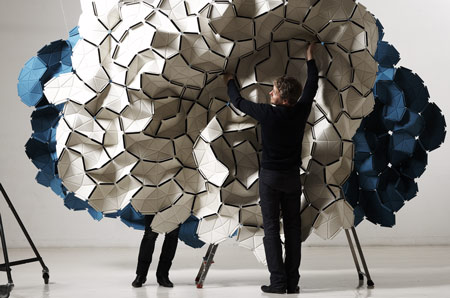
Clouds by Ronan and Erwan Bouroullec
ART or DESIGN
TEMPORARY or PERMANENT
LARGE SCALE or SMALL SCALE
TRANSFORMING and/or DEFINING and/or FORMING
IMMERSIVE and/or DISTANT
PATTERN and/or COLOUR and/or REPETITION and/or SHAPE
Sample of moquette designed by Marianne Straub, 1966-1970
ART or DESIGN
TEMPORARY or PERMANENT
LARGE SCALE or SMALL SCALE
TRANSFORMING and/or DEFINING and/or FORMING
IMMERSIVE and/or DISTANT
PATTERN and/or COLOUR and/or REPETITION and/or SHAPE
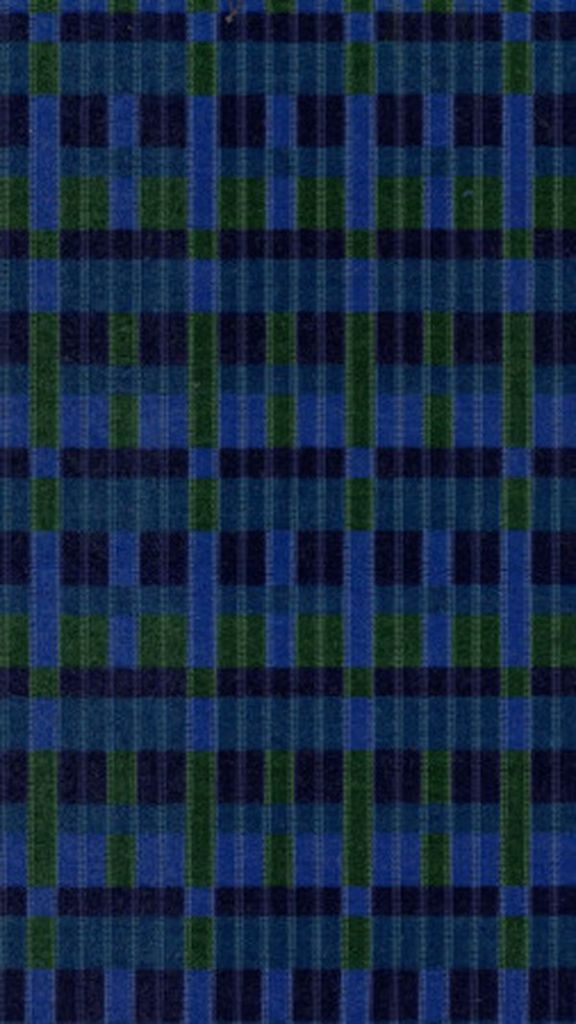
Exercise 1
Seeking visual communication is Marianne Straub’s moquette design, I can note several elements which influence visual connotation:
Pattern: These 70-80’s patterns initially seem so meaningless, yet get quite interesting and imaginative the longer you stare at them. As a child, I remember these type of fabrics popping out in 3D if you stare hard enough… The pattern is cubistic, repetitive and orderly, which might signify functionality and punctuality. the inter crossing lines somehow seem to visually associate with movement and urbanism. From an imaginative perspective, I see something resembling an urban map in the pattern, with streets, canals and square buildings.
Color: The colors used are calm, they remind me of our planet’s color range: Sky blues, ocean blues and grass green.
available on: https://www.ltmuseum.co.uk/collections/collections-online/vehicle-parts/item/1983-249 accessed 29/12/2020
Research point – Christian Boltanski: Personnes
ART or DESIGN
TEMPORARY or PERMANENT
LARGE SCALE or SMALL SCALE
TRANSFORMING and/or DEFINING and/or FORMING
IMMERSIVE and/or DISTANT
PATTERN and/or COLOUR and/or REPETITION and/or SHAPE
You’ll see that, in addition to the garments, the noise of heartbeats permeates the exhibition. Why do you think this might be?
The sound of heartbeats contradicts the silence of the installation, it symbolizes life where the arrangement of clothing symbolizes the remains of life. Additionally, the soundtrack contributes to a grim and eerie atmosphere the installation evokes.
In this case, the textiles symbolize the life of a person, or otherwise what remains following death. Despite being fictional, the installation draws a strong emotional response, as its reminicent of real life tragic settings where textiles represent lives gone, such as plane crashes and other large scale accidents, where bodies cannot be found.
According to Boltanski, the mechanical claw represents the hand of god, chance or destiny of life under uncertainty of when our time is up. The name ‘Personnes’ has a somewhat similar intention, as the installation examines the meaning of people, life memorials and death from a broad, philosophical perspective.
I believe a strong connotation of the holocausts is formed by the combined factors of the installation environment and venue, the textiles representing people beside iron poles and wire. Boltanski’s is of Ukrainian Jewish decent and this installation reminds me of holocaust memorials, where quite often, victims are represented by piles of textiles, shoes or other personal items.
Research point – Textile layering
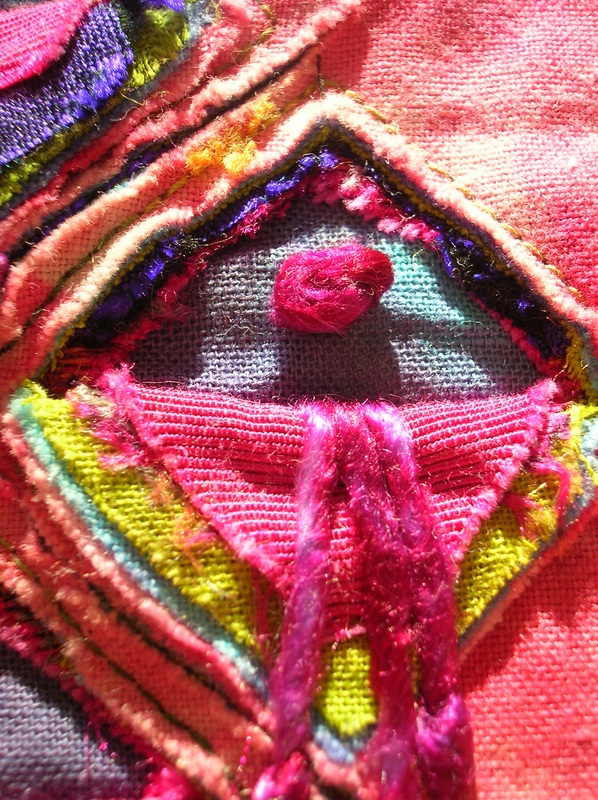
Textile layering techniques are used in various ways to manipulate, define, hide / reveal. Laying creates an effect of depth and continuous discovery, mystery, which is somewhat relatable to the effect of the ‘Totes Haus ur’. Layering is used to add depth, volume, dimension, unexpected surprises and mystery to an object.

 Creative Arts Today


